

- The Journal
Reading the Mara crossings before they happen.
Every July, guests ask the same question on the drive north: will we see a crossing? The honest answer is that nobody can promise one. But after nineteen seasons on this river, you learn to read the days leading up to it.
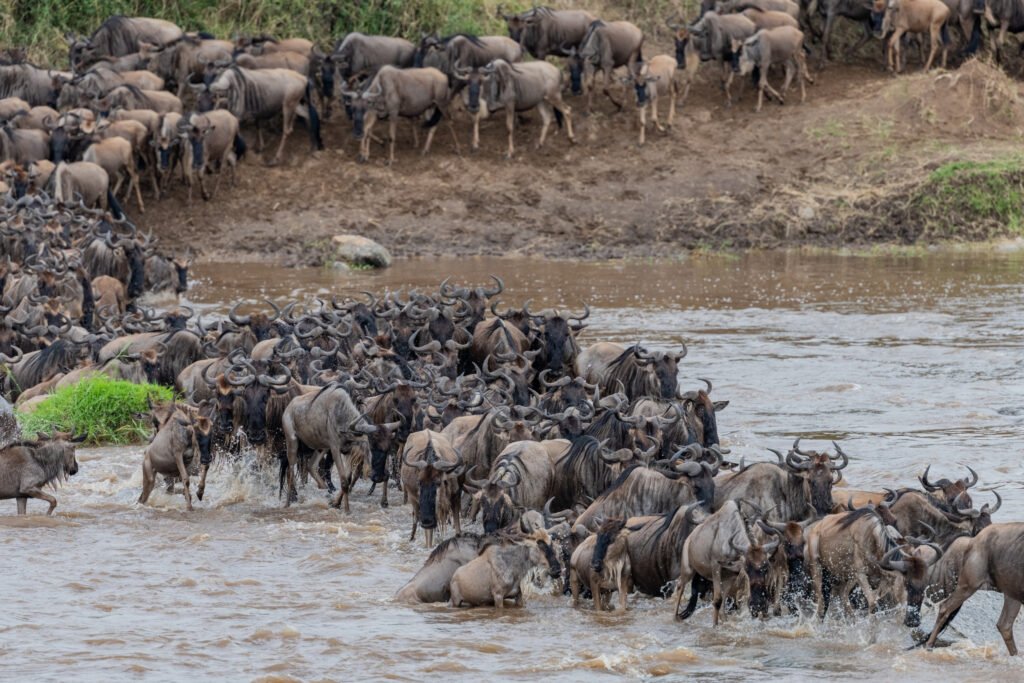
The herds arrive at the Mara River in waves, not as a single front. By the time the first groups reach the water in late June, the grass on the Kenyan side has already been signalling to them for weeks. What happens next depends less on the river than on pressure — how many animals are stacked behind the front, how long they have been standing, and whether anything spooks them in the final hundred metres.
What we watch the day before
A crossing is rarely spontaneous. The herd builds at a known point, usually one of six or seven traditional crossing sites, and it builds for hours. If you arrive at dawn and the bank is already three or four hundred animals deep, the odds shift considerably. If it is thin, we drive on and check the next site.
- Herd depth at the bank — density matters more than total numbers.
- Direction of movement in the preceding twelve hours.
- Water level and current speed at the chosen site.
- Predator presence on the far bank, which can stall a crossing for a full day.
- Vehicle numbers — too many, too close, and the herd will turn.
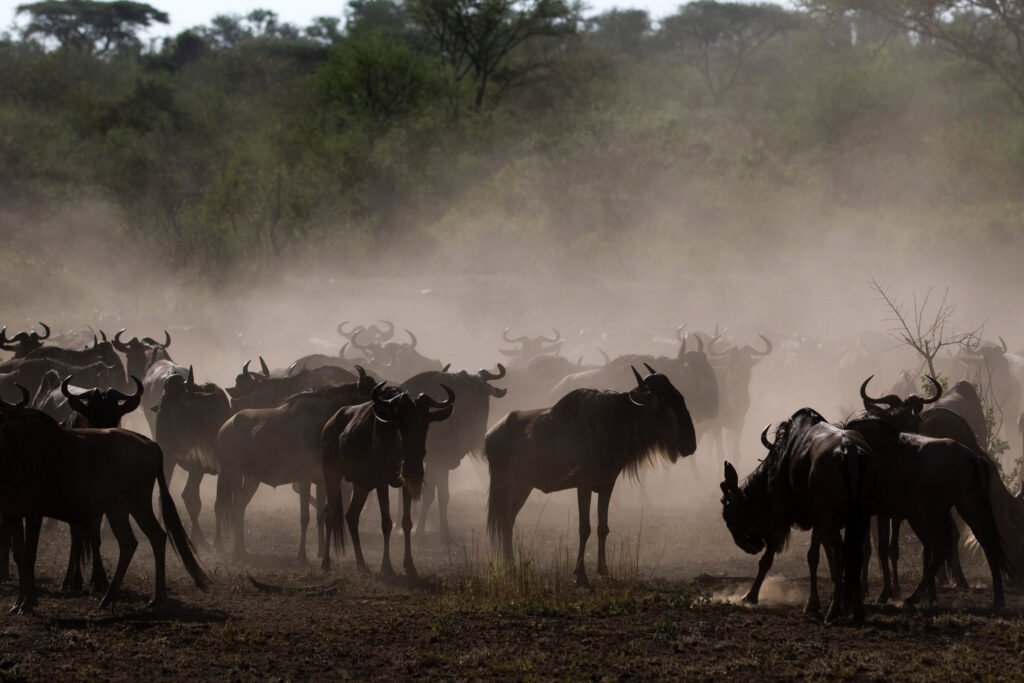
The herd decides. Our job is to be in the right place, quietly, before it does.
Elibariki Mosha · Head guide
Why some years they refuse
In 2023 we watched a herd hold position at the same bank for three consecutive days without entering the water. The river was high, the current fast, and a large crocodile was sitting in the shallows on the exit side. The animals were not confused. They were correct.
That patience is worth understanding before you book. A crossing is the single most photographed event in East Africa, but it is also the most conditional. We plan northern Serengeti itineraries with at least three full days in the crossing zone for exactly this reason — one morning is a lottery ticket, three mornings is a strategy.
Planning around it
If crossings are your priority, travel between late July and early October and base in the north rather than moving through it. Camps in the Kogatende and Lamai sectors put you within thirty minutes of most active sites, which means you can be in position before the light and still be there when the herd finally commits at two in the afternoon.
And accept the possibility that you will not see one. Most of our guests do. Some do not, and still describe the northern Serengeti as the best part of their trip — because a river bank holding four thousand animals in total silence is its own event, crossing or not.
- Written by
Elibariki Mosha
Head guide. Nineteen seasons across the Northern Circuit.
- Keep reading
More from the field.
- Begin · 2026/27 dates filling
Tanzania is not a checklist trip. It's a turning point.
Tell us when you can travel and what stirs you. We'll send back a draft itinerary inside two days — no commitment, no template.

